






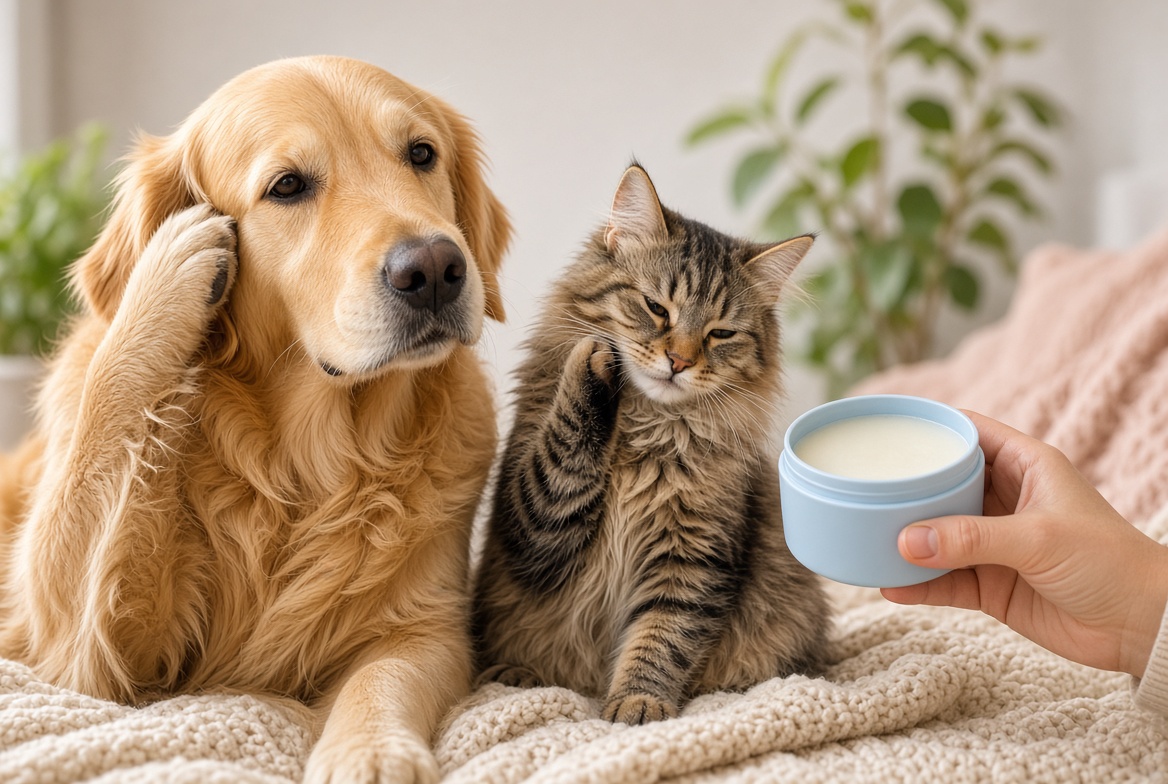
Itchy Pet Awareness Month: Is Your Pet Trying to Tell You Something?
August is Itchy Pet Awareness Month — a good reminder that constant scratching, licking, or chewing may be more than just an annoying habit. Every pet scratches occasionally. But when your dog can't seem to stop scratching or your cat keeps licking the same area over and over, something may be making them uncomfortable. Your pet can't tell you, "My skin is driving me crazy." Sometimes scratching is how they tell you.
What's Making Your Pet Itch?
There are many possible reasons a pet may suddenly become itchy. Some are relatively simple to address, while others require veterinary diagnosis and treatment.
Common causes can include:
-
Fleas, mites, and other parasites
-
Environmental allergies, including pollen, grass, mold, and dust
-
Food-related allergies or sensitivities
-
Bacterial or yeast skin infections
-
Contact irritation from certain household or grooming products
-
Dry or irritated skin
-
Underlying skin conditions
Sometimes more than one problem can be happening at the same time.
That's why persistent itching shouldn't simply be treated as a bad habit.
7 Signs Your Pet's Itching Deserves Attention
Keep an eye out for changes in your pet's normal behavior or appearance.
Signs can include:
-
Frequent or intense scratching
-
Constant licking or chewing
-
Red or irritated skin
-
Hair loss or thinning patches
-
Scabs, sores, or hot spots
-
Repeated paw chewing
-
Ear scratching, head shaking, odor, or recurring ear problems
If these symptoms persist, become severe, or your pet appears uncomfortable, contact your veterinarian.
Why You Shouldn't Ignore Constant Scratching
The original cause of an itch may be relatively small, but repeated scratching and chewing can make the situation worse.
A pet can damage their own skin, potentially leading to inflammation, open sores, hair loss, and secondary infections.
That's why identifying the underlying cause matters.
Stopping the scratching is only part of the solution.
Finding out why your pet is scratching is the important part.
How Is Pet Itching Treated?
Treatment depends entirely on what's causing the problem.
After evaluating your pet, a veterinarian may recommend options such as:
-
Flea or parasite prevention and treatment
-
Medicated shampoos or topical products
-
Treatment for bacterial or yeast infections
-
Allergy management
-
Dietary changes or veterinarian-supervised food trials
-
Prescription medications
-
Additional testing for persistent or recurring problems
Avoid giving your pet human medications or applying creams, essential oils, or home remedies without veterinary guidance. Products that are safe for people aren't automatically safe for pets.
Don't Forget About Fleas
One common mistake is assuming:
"I don't see fleas, so my pet can't have fleas."
Unfortunately, it isn't always that simple.
Some pets can be extremely sensitive to flea bites, and you may not necessarily notice fleas before your pet begins showing signs of irritation.
Keeping veterinarian-recommended parasite prevention current can be an important part of protecting your pet.
Pay Attention to the Paws and Ears
Sometimes the first sign of an allergy or skin problem isn't scratching the body.
Watch the paws.
Repeated paw licking or chewing can be worth discussing with your veterinarian, especially when accompanied by redness or irritation.
The ears can provide clues too.
Frequent head shaking, scratching at the ears, redness, discharge, or unusual odor may indicate an ear problem that needs veterinary attention.
Your Pet Sitter Can Help Spot Changes Too
If someone else regularly cares for your pet, ask them to let you know about changes they notice.
A pet sitter or dog walker might notice:
-
More scratching than usual
-
Excessive paw licking
-
New bald spots
-
Changes in the skin or coat
-
Head shaking
-
Changes in behavior or energy
Small observations can be valuable because pets don't always behave exactly the same way when their owners are around.
When using a pet sitter, make sure they know your pet's normal routines, allergies, medications, veterinarian information, and anything unusual they should watch for.
Make August a Month of Comfort
Itchy Pet Awareness Month is ultimately about paying attention.
Know what's normal for your pet.
Notice when something changes.
And don't assume constant scratching is something your pet simply has to live with.
Sometimes one little scratch means nothing.
But when scratching becomes your pet's full-time occupation, it's worth finding out why.
They may be trying to tell you something.
Shocco's Pet Care Reminder ❤️
Your pet depends on you—and the people you trust with their care—to notice when something isn't right.
Whether you're home or away, good pet care starts with paying attention to the little things.
Shoccos.com — Connecting Pets, People & Care.
Important Medical Disclaimer
This article is for general educational purposes only and is not veterinary medical advice. Persistent itching, skin irritation, hair loss, sores, ear problems, or sudden changes in your pet's behavior should be evaluated by a licensed veterinarian. Never give medications or begin treatments without appropriate veterinary guidance.