




Does Your Dog Trust You? 7 Ways to Build a Stronger Bond
Trust isn't something we can demand from our dogs. It's something we earn.
Your dog depends on you for food, shelter, exercise, safety, and care—but dependence and trust aren't exactly the same thing.
A dog who truly trusts you may feel safer exploring the world, meeting new people, experiencing unfamiliar situations, and simply relaxing at home.
Whether you've had your dog for years or you've just welcomed a new dog into your family, building trust starts with something surprisingly simple:
Listen to what your dog is telling you.
1. Let Your Dog Come to You
We naturally want to approach dogs, pet them, hug them, and show affection.
But some dogs need space first.
Instead of immediately reaching toward an unfamiliar or nervous dog, give them an opportunity to approach you.
Sit or stand calmly. Avoid crowding them. Let them investigate at their own pace.
If they want interaction, they'll often let you know.
Giving a dog a choice can be one of the first steps toward earning their trust.
2. Respect the Word "No"—Even When They Can't Say It
Dogs communicate constantly through body language.
Turning away, moving backward, licking their lips, lowering their body, pinning their ears back, becoming unusually still, or trying to leave can indicate discomfort or stress.
Don't force affection because you want to cuddle.
If your dog walks away, let them.
If they're sleeping comfortably, consider calling them to you rather than disturbing them.
When dogs learn that their signals are respected, they may feel safer communicating with you.
3. Be Predictable
Imagine living with someone whose rules changed every day.
Today you're allowed on the couch.
Tomorrow you're punished for getting on it.
One person allows jumping. Another gets angry about it.
That can be confusing.
Dogs often benefit from consistency.
Try to keep household expectations, feeding routines, walking schedules, and training cues reasonably predictable.
Your dog begins to understand:
"I know what happens here. I know what is expected of me."
That predictability can help create security.
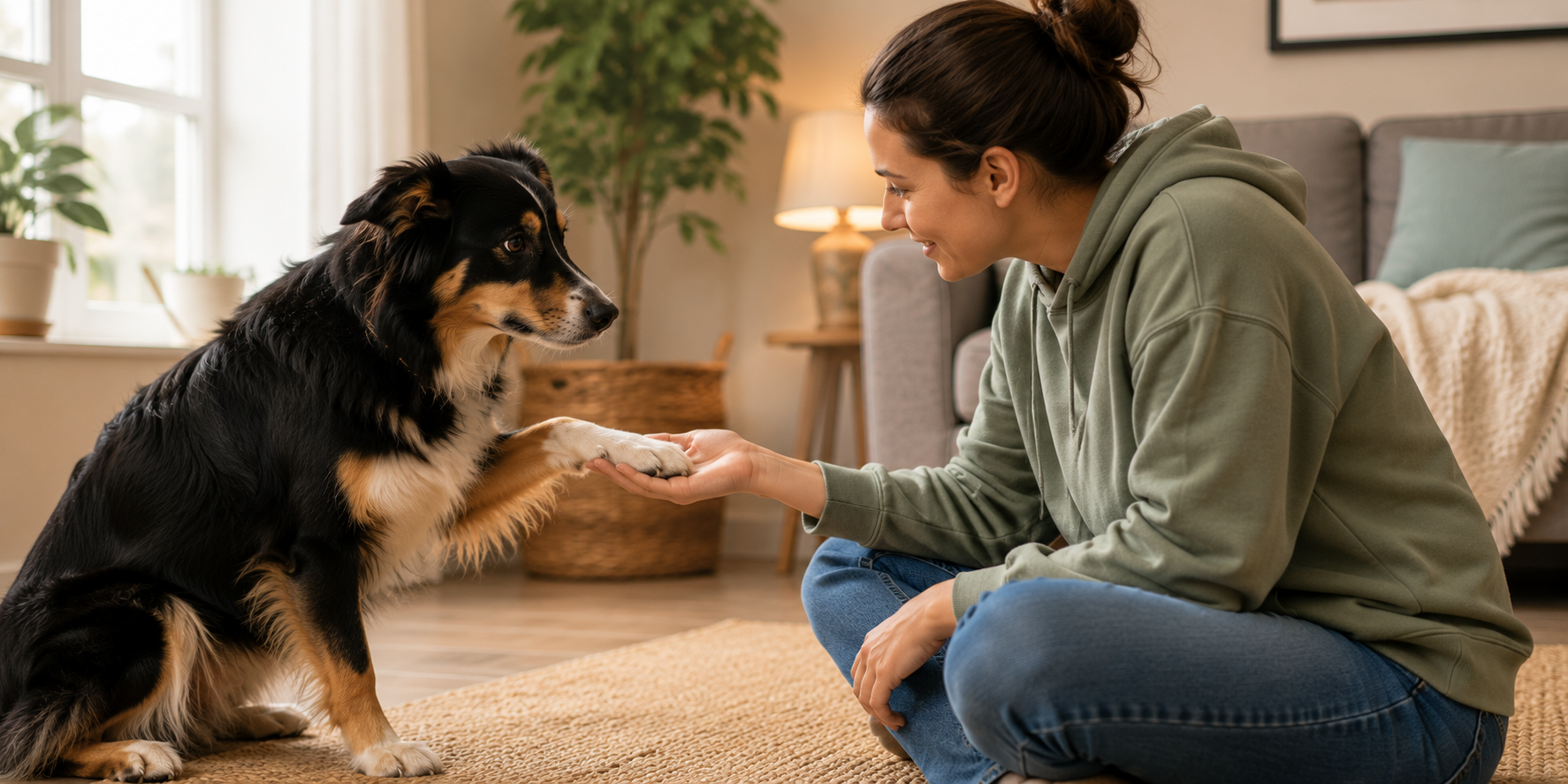
4. Make Training Something You Do Together
Training doesn't have to be about correcting mistakes.
It can be a game.
Try short sessions teaching behaviors such as:
-
Sit
-
Stay
-
Touch
-
Come
-
Find it
-
Spin
-
Go to your bed
Reward behaviors you want to see using something your dog values, such as praise, play, or appropriate treats food, dog treats, toys
Keep sessions positive and short.
The goal isn't simply to create a well-trained dog.
It's to create communication between the two of you.
5. Discover What Your Dog Actually Loves
Not every dog wants the same reward.
One dog may do anything for a tiny treat.
Another wants a tennis ball.
Another wants to sniff every tree in the neighborhood.
And another may simply want to sit beside you.
Pay attention.
What makes your dog's tail move?
What gets their attention?
What helps them relax?
Learning what your individual dog enjoys makes it easier to create positive experiences together.
6. Don't Punish Fear
If your dog is afraid of thunder, strangers, another animal, a veterinarian visit, or something else, punishment won't make the scary thing less frightening.
Fear isn't bad behavior.
Give your dog space and help them feel secure. For persistent or serious fear, anxiety, aggression, or sudden behavioral changes, talk with your veterinarian or a qualified behavior professional.
Sometimes behavioral changes can also have an underlying medical cause.
7. Spend Time Together Without Asking for Anything
This might be the most important one.
Not every interaction needs to involve training.
Take a slow walk.
Sit together outside.
Play.
Explore somewhere new.
Or simply sit in the same room.
Put your phone down for a little while and give your dog your attention.
Trust often develops through hundreds of ordinary moments rather than one big gesture.
How Do You Know If Your Dog Trusts You?
Every dog expresses comfort differently, but you may notice your dog:
-
Choosing to spend time near you
-
Approaching you voluntarily
-
Showing relaxed body language around you
-
Looking to you during unfamiliar situations
-
Playing comfortably in your presence
-
Resting or sleeping peacefully nearby
-
Responding willingly to familiar cues
Remember that personality matters.
An independent dog doesn't necessarily love or trust you less than a dog who follows you everywhere.
Trust Matters When Someone Else Cares for Your Dog, Too
When you're choosing a pet sitter or dog walker, trust shouldn't only exist between you and the sitter.
Your dog needs to feel comfortable too.
Whenever possible, allow your dog and a new caregiver to become acquainted before you leave.
Tell the sitter about your dog's:
-
Normal routine
-
Favorite activities
-
Feeding schedule
-
Fears and triggers
-
Medications
-
Walking habits
-
Favorite treats and toys
-
Veterinarian and emergency information
And most importantly, tell them how your dog likes to be approached and handled.
A great pet sitter doesn't simply care for your dog.
They learn to understand your dog.
Trust Is Built One Moment at a Time
You can't explain to a dog that you're trustworthy.
You show them.
You show them when you respect their space.
You show them when you're patient.
You show them when your actions are predictable.
You show them when they're frightened and you help them feel safe.
And you show them every time they look to you and discover that you're there.
That's how trust becomes a bond. ❤️
Shocco's Pet Care Tip
Before leaving your dog with a new pet sitter, consider arranging an introduction first. Give your dog time to meet the sitter while you're present and allow the interaction to develop naturally.
Shoccos.com — Connecting Pets, People & Care.
Important Note
This article provides general educational information. Significant fear, anxiety, aggression, sudden behavioral changes, or other concerning behaviors should be discussed with your veterinarian or an appropriately qualified animal behavior professional.